Sunday, January 21, 2018

Great Barrier Reef: Australia unveils A$60m protection plan


Great-Barrier=Reef-Australia-unveils-A$60m-protection plan

The Australian government has announced a A$60m (£34m; $48m) plan to help improve the health of the Great Barrier Reef.
The reef suffered mass coral bleaching events in 2016 and 2017, which scientists said were a result of warmer ocean temperatures.
It has also endured damage from crown-of-thorns starfish and cyclones.
The new money, to be spent in four ways, will particularly target starfish and soil erosion.
Australian Prime Minister Malcolm Turnbull said there was a "strong link" between the coral-eating species and run-off from water pollution.
"While [the reef] is facing increasing threats, we intend to remain leaders in reef management," he said.
The new measures include spending:
  • A$36m on farmers to restore vegetation around reef catchments, offsetting erosion;
  • A$10m for an "all-out assault" on crown-of-thorns starfish by increasing culling vessels;
  • A$6m on science agencies to develop ways to make coral more "resilient";
  • A$4m to employ more field officers to warn about bleaching.
It is part of a commitment by federal and state governments to spend A$2bn on improving the reef over the next decade.
"We want to ensure its future for the benefit of all Australians, particularly those whose livelihood depends on the reef," the government said in a statement on Monday.

The most luxurious book in history?


“When the Titanic went down on the night of April 14 1912 in the sea off the New World, its most eminent victim was a book…” French-Lebanese author Amin Maalouf may have been stretching it a bit in his 1988 historical novel Samarkand. Or not, depending on whom you were to ask at the time. The book in question was a fictional manuscript of the Rubáiyát (Quatrains) by the 11th-Century Iranian polymath Omár Khayyám, prized because it was the only one in existence. In fact, a plethora of copies of the volume of Persian poems existed. There was, however, at the time the Titanic made its ill-fated voyage, one that outshone them all – not in terms of what was written within, but rather, its almost otherworldly appearance. It was this very real manuscript that served as the inspiration for Maalouf’s acclaimed novel. “At the bottom of the Atlantic there is a book,” he writes in its introduction. “I am going to tell you its history.”
‘Whoso desireth a peacock must endure the trials of Hindustan’, says a popular Persian proverb. While this particular one refers to the Iranian monarch Nader Shah Afshar’s sacking of Delhi and looting of the famed Peacock Throne (amongst other things) in the mid-18th Century, it might just as well have been coined a few centuries later in London. With a desire to revive medieval traditions of bejewelled bookbinding, George Sutcliffe and Francis Sangorski were renowned throughout the city in the early 1900s for their opulent and over-the-top designs. Accordingly, it was to them that Henry Sotheran’s, a bookstore on Sackville Street, went to commission a book like no other.

Friday, January 19, 2018

Apple's New Flagship - iPhone X


The iPhone X, pronounced "iPhone 10," was introduced at Apple's September 2017 event as a classic "One more thing..." addition to the iPhone 8 and 8 Plusproduct lineup. According to Apple, the iPhone X represents the biggest technological leap forward since the original iPhone was introduced 10 years ago in 2007, and it sets the path for the next decade of iPhone development.
Apple's aim with the iPhone X was to create an iPhone that's all display, blurring the line between physical object and experience. The 5.8-inch front screen melts into a highly polished curved-edge stainless steel band that encircles a durable all-glass body available in two pearlescent finishes: Space Gray and Silver. Both feature a black front panel.
The edge-to-edge top-to-bottom Super Retina display adopts OLED technology for true-to-life colors, deep blacks, and a million-to-one contrast ratio. It features a 2436 x 1125 resolution and 458 pixels per inch, the highest resolution and pixel density ever introduced in an iPhone. It supports HDRwide color3D Touch, and True Tone for adjusting the white balance of the display to match the ambient lighting.
At 5.8 inches diagonally, the iPhone X has the largest display introduced in an iPhone yet, but with no bezels aside from a notch housing the camera and sensors, it fits comfortably in the hand. At 143.6mm tall by 70.9mm wide by 7.7mm deep, it's not much bigger than an iPhone 8, and it's smaller than an iPhone 8 Plus.
The glass body of the device is IP67 water and dust resistant and it enables support for inductive wireless charging for the first time. The iPhone X adopts the Qi wireless standard and can charge through the glass back using any Qi-certified charging accessory. Apple is making an "AirPower" accessory to charge iPhone X, Apple Watch Series 3, and AirPods simultaneously, but it won't be out until 2018.
With an edge-to-edge design, there is no room for a Home button, so the iPhone X adopts a new user experience. A swipe up at the bottom of the screen brings up the Home screen, while a swipe and a hold brings up App Switcher. There's a Tap to Wake feature for looking at notifications, the side button can be pressed and held to activate Siri, and the Control Center is accessed by swiping downwards from the top status bar.

Saturday, January 13, 2018

The ocean is a strange place after dark


 Bioluminescence makes the sea shimmer

You may have seen the pictures.
It’s night-time in an impossibly exotic location. Waves are breaking on the beach. The water is sparkling with electric blue lights. 
The internet loves an image of a magical-looking bioluminescent bay. You may also have seen travel bloggers bemoaning the real event as not quite living up the hype.
Even if the latter is true, bioluminescence (in this case usually caused by planktonic organisms called dinoflagellates) is a pretty amazing natural phenomenon.
Dinoflagellates emit blue light when disturbed, which is why they can be seen sparkling over wave crests, around boats or when a hand or paddle runs through them.
These tiny creatures are the most common source of bioluminescence at the ocean’s surface.
So-called bioluminescent bays such as in Puerto Rico and Jamaica are among the best-known places to witness the glow. However, the ephemeral phenomenon can be found throughout the ocean where there are dense gatherings of dinoflagellates.
Sometimes dinoflagellates’ population increases rapidly causing blooms, which by day are coloured a less attractive red-brown, sometimes known as red tides. And some, but not all, of these red tides are poisonous. 
Even stranger and rarer than bioluminescent bays are “milky seas”, where continually glowing water stretches for as far as the eye can see.
Milky seas have only been seen a few hundred times since 1915, mainly concentrated around north-western Indian Ocean and near Java, Indonesia.
They are not caused by dinoflagellates, but are thought to be the result of “bioluminescent bacteria that have accumulated in large numbers near the surface”, explains to Dr Matt Davis, Assistant Professor of Biology, St. Cloud State University in the US, who specialises in bioluminescence.
Reports by sailors over the centuries have described milky seas as a nocturnal whitish glow like a field of snow, but scientists have had little chance to investigate the phenomenon first-hand.

In 2005, researchers analysing archived satellite images found that milky seas could be seen from space and that one satellite had captured images of a huge area of ocean that had displayed the strange glow for three consecutive nights a decade earlier. 

Best computer 2018: the best PCs we've tested

Best-computer-2018-the-best-PCs-we've-tested
Best PC: Dell XPS Tower Special Edition

Anyone who’s ever watched an episode of Black Mirror should know already just how integral it is that you choose the best desktop PC for your needs. One wrong move and you could end up reviving, and falling in love with, an AI simulation of a deceased loved one. It’s for that reason that we’ve made it our duty to scout out the best desktop PCs around. After all, like all technology that accelerates at a breakneck pace, computers aren’t as simple as they once were.

Nowadays  

you can get an easily upgradeable desktop tower like the family computer in your living room that’s still running Windows XP. Or, better yet, you could be an early(-ish) adopter of one of the groundbreaking inventions of the 21st century. All-in-ones, for instance, are all the rage these days, and although you can’t add components later on to conceive a more powerful rig, mini computers comprise the best desktop PCs as well.


In the end  

Best-computer-2018-the-best-PCs-we've-testedthe best desktop PCs aren’t always the most powerful or most expensive either, despite what gamers will tell you. Instead, what transpired in creating the following list was the equal consideration of both performance and value. Accounting for price and quality, we tested and reviewed every computer we could find in search of the best desktop PCs money can buy. The resulting rankings include eight computers from all walks of life below.

Tuesday, January 9, 2018

Yamaha FZ S V 2.0


Yamaha has launched the new FZ Series in India. Featuring a host of mechanical and cosmetic updates, the popular 150cc motorcycle now looks and feels different.  And with its new ‘Blue Core’ engine concept, the motorcycle is also said to be more efficient than ever before. As a part of this new upgrade, the Japanese brand has also launched the new FZ-S Version 2.0. 

The FZ-S Version 2.0 highlights the style quotient with new colours  and  graphics. Design-wise, the rest of the model is pretty much the same as the standard new FZ which now gets a two piece seat, revised bikini faring, and new cooling shrouds beneath the fuel tank. 

The new FZ-S is powered by a newly designed air-cooled, 149cc single-cylinder engine which benefits from a closed loop fuel injection system. The same engine also powers the standard new FZ. Tweaked to deliver a better fuel efficiency, the engine now produces 13.1bhp of power and 12.8Nm of torque. For this new model, Yamaha is claiming a 14 per cent improvement in fuel economy.  

The new FZ-S is available in Matte Green, Alligator Green, Shark White, Wolf Grey and Viper Black. it will take on the Bajaj AS150, Honda CB Hornet 160R and the Suzuki Gixxer. The Yamaha FZ-S 2.0 is priced at Rs 83,042 (ex-showroom Delhi). 


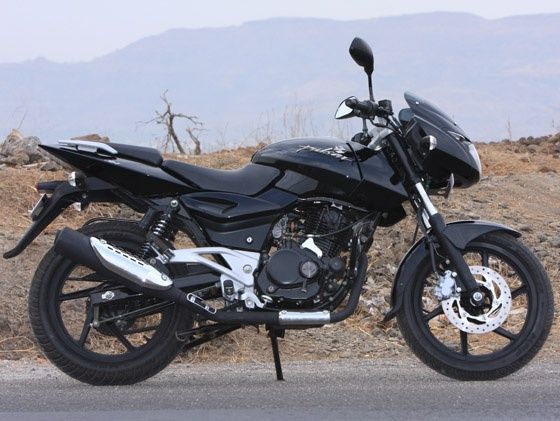
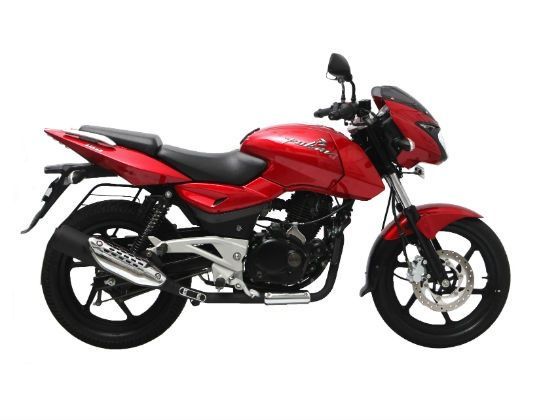
Bajaj Pulsar 150


The Bajaj Pulsar 150 has been the Pune-based automaker’s main seller for the last 10 years and has changed Bajaj’s fortunes since its debut. Launched in November 2001, the Bajaj Pulsar and its larger twin were a revelation for the Indian market which until that time had been populated with commuter motorcycles and the single player called the Hero Honda CBZ in the 150cc segment. Its advanced styling and many modern features further fuelled the demand for premium commuters and set the bike on a course for the history books.

The Bajaj Pulsar’s first appearance included a dome headlight, aircraft type fuel tank lid, full analogue console with side-stand indicators. The current avatar includes the famous domed cowl, side scoops, 3D lettering and full digital console with analogue tachometer. It is offered in three colour options and a single variant.

The engine is a 149cc unit that produces 15bhp and 12Nm of torque. Power is sent to the rear wheel via a five-speed sequential gearbox and a chain drive. Standard features include twin spark ignition and drum brake for the rear wheel. The Bajaj Pulsar 150 competes with Honda CB Unicorn, Hero Xtreme, Hero Hunk, Suzuki GS150R and the Yamaha SZ-RR. The Pulsar 150 is priced at Rs 74,976 (ex-showroom).


 North Korea’s representatives assured the South Korean government Tuesday that the country’s “cutting-edge” nuclear weapons are aimed only at the United States, not at its neighbors, as they struck a deal to send athletes to next month’s Winter Olympics and to reopen a military hotline.
The sobering words underscored how, despite the rare agreement with the South, Pyongyang continues to assert its right to fend off the United States with nuclear arms.
Nevertheless, South Korea achieved its immediate goal of bringing North Korean athletes to compete in what Seoul has dubbed the “peace games.” South Korean officials portrayed this agreement as a first step in a significant improvement in bilateral relations. The question, analysts said, is whether the North will pursue this opening with any sincerity.
South Korea signaled that it was willing to suspend some of its direct sanctions on North Korea to facilitate a Northern delegation’s travel to the Olympics, which will open Feb. 9 in the South’s PyeongChang region.

Saturday, January 6, 2018

2017 BMW i8 review

The world first got a glimpse of the BMW i8 at the 2013 Frankfurt Motor Show and the plug-in hybrid performance car hasn't changed much since then. The i8 was never meant to be a high-volume car, but demand was so high that in 2015 the company doubled their daily production numbers to twenty units to meet demand. Today there are fewer than 5,000 of them on the road, so consider yourself lucky if you see one. Consider yourself even luckier if you get to drive one.  
BMW's first foray into a performance hybrid sports car has all the trappings of a brutally fun ride: gorgeous exterior, three power sources and a chassis willing to dive into turns. However, it also comes with an exorbitant price tag and a powerplant that only kicks into fun long after the driver requests it.
A mid-mounted 1.5-liter three cylinder turbocharged engine puts 228 horsepower to the rear wheels, while two electric motors, one mounted near the engine, one living up front, throws power to the front. Combined, the powertrain kicks out 357 horsepower and 420 pound-feet of torque to all four wheels. Extra go-go juice is stored in a 7.1-kWh battery, good for 15 miles of all-electric range. Total driving range is 330 miles and the EPA gives the i8 an MPGe rating of 76 in hybrid mode or 28 miles per gallon combined using just the gasoline engine.


The good news here is that you never have to plug in the i8 or visit a public charging station if you don't want to. The gas engine can function as an on-board generator, while regenerative braking captures energy as well. However, you can recharge in two and a half hours from a level 2 charging station or four and a half hours from a standard 110-volt outlet.
Behind the wheel, the i8 is both ridiculously fun and a tad bit frustrating, all at the same time. As with many performance cars these days, there are multiple driving modes. Comfort is great for toddling around town or you can go all-electric in eDrive. Eco Pro allows for the gas engine to kick in, but limits electrical features like HVAC output to save as much juice as possible.
2018 BMW i8

Thursday, January 4, 2018

Honda CBR 300R

Honda unveiled the 2014 CBR 300R, for the first time, at the China International Motorcycle Trade exhibition in mid-October 2013. It was again exhibited at the 2013 EICMA event at Milan, Italy.

The CBR 300R is a bigger version of the CBR 250R. The length of the CBR 300 R is 2035 mm, width is 720mm and height is 1120mm. When we compare it to the CBR 250 R, the length is increased by 3 mm, width is same and height has decreased by 7mm. Honda has also increased the wheelbase of CBR300 by 13mm to 1380mm. The ground clearance of both CBR 300 R and CBR 250 R is the same, which is 145mm. Both the bikes get the same wheels- 110/70-17M/C for the front and 140/70-17M/C at the rear.
The Yamaha R15 has been on sale in India since 2008 and is the Japanese bike maker’s premium 150cc sports bike. Underpinned by the same deltabox frame from the v-ixxion and eschewing a design from the larger R1, it has been popular with those who want efficiency with a whole load of sportiness. Yamaha facelifted the bike in 2011 and dubbed the new version as R15 V 2.0. 

At the heart of the R15 is a 150cc single cylinder unit that produces 17bhp and 15Nm of torque. The engine transmits power via a six-speed gearbox and a chain drive. It gets telescopic forks in the front and a monocross unit at the back. When it was launched, the R15 was one of the first bikes to offer a rear disc brake and continues to do so even on the facelifted model. The front unit is a dual piston 267mm disc while the rear gets a dual piston 220mm unit. Standard features include pilot lamps.

Bajaj Auto announces 50 per cent Pulsar production shift to Aurangabad

Bajaj Pulsar 180
Things haven’t been going smooth at Bajaj’s Chakan plant for the past one year as the management and the workforce have been regularly engaged in a tussle. In fact, last year the plant was shut down for close to 50 days as workers had gone on a strike. Bajaj Auto had suffered huge losses at that time as the lockdown had affected its sales. With the workers union announcing another similar strike, Bajaj Auto has decided to shift close to 50 per cent of the Pulsar from its Chakan plant in Pune to the Waluj plant in Aurangabad to avoid loss in sales. Before this shift, the Waluj plant used to produce 25 per cent of the entire Pulsar range production.
Company officials haven’t confirmed yet whether this shift is permanent or a temporary one. This decision will, however, depend on the positive outcome of the negotiation between the company management and the workers. The Chakan plant manufactured 80,000 units of the Pulsar range on a monthly basis. This figure has now dropped to 45,000 units per month. Bajaj has announced that it will not shift the production of the Avenger and the KTM range from its Chakan plant. Currently 5,000 to 6,000 units of the Avenger and KTM range is produced at the Chakan plant on a monthly basis.
Bajaj Pulsar 180 studio shot

Suzuki Gixxer : Detailed Review

The new Suzuki Gixxer has been specifically designed for India and its neighbouring regions with the focus being on styling, fuel efficiency and cost effective production. And the bike scores in pretty much all these aspects. The Suzuki Gixxer is delightfully striking with sharp character lines. Most of these lines also have a purpose, which makes the design twice as nice. The muscular and stylishly sculpted fuel tank has great knee recess offering excellent grip giving the Gixxer a big bike feel and also has the segment standard 12-litre fuel capacity. There’s also the currently trending ‘3D’ Suzuki logo on the tank with edgy tank scoops bearing the Gixxer nomenclature.
It’s a street bike, so the Suzuki Gixxer gets a smart triangular headlight with a bikini fairing. The well chiseled side panels carry a trendy matt black and metallic gold combination. Another unique design aspect is its stout dual-type exhaust, which the company has used for the first time on sub-250cc motorcycle. Suzuki claims that this exhaust design isn’t just for show, but actually helps the process of scavenging.

Wednesday, January 3, 2018

TVS Apache RTR 150


TVS Apache RTR 150 where RTR stands for Racing Throttle Response which means RTR can make instant acceleration which can climb on 60 km/h in just 4.8 seconds without pillion. It makes RTR 150 is a real speed monster no doubt. With 15.2 Bhp @ 8500 rpm maximum power, Apache RTR 150 is regarded as one of the fastest motorcycle in our country as well as the top product of TVS in Bangladesh.

The people of the whale

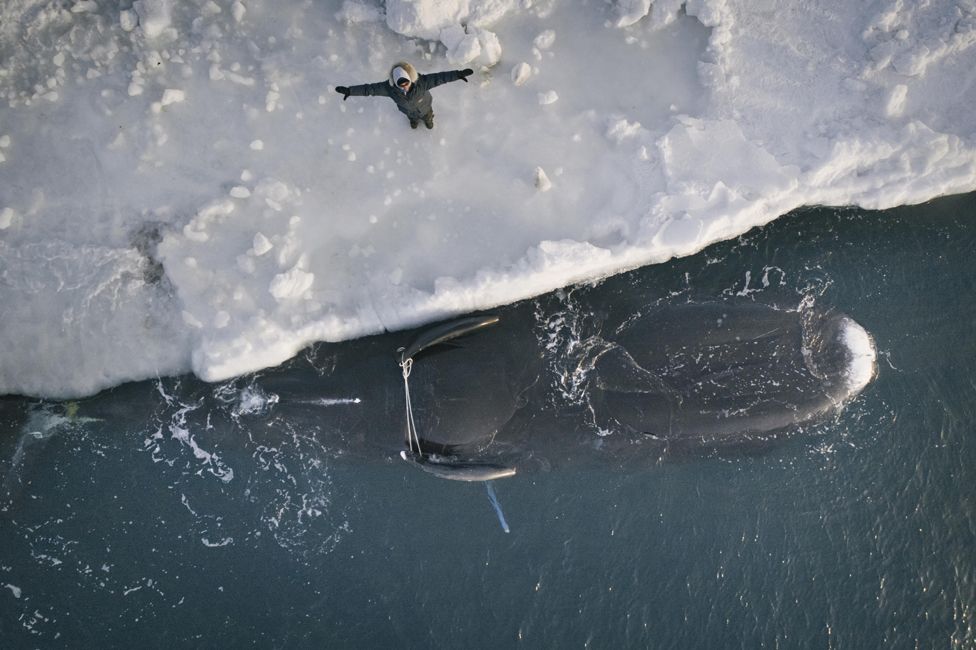
Flora Aiken gives a silent blessing to the first bowhead whale of the spring season.
Kiliii Yuyan is an indigenous Nanai photographer who documents native cultures and wilderness conservation issues. He spent time with the Inupiat, an indigenous community from North Slope Alaska, whose lifestyle and culture is dependent on subsistence harvest of marine mammals.
Members of the community are allowed to catch limited number of bowhead whales a year from stable populations. The first boats to harpoon the whale receive shares. The lead whaling crew divide the head between them.
Above, Flora Aiken gives a blessing to the first bowhead whale of the spring season. The Inupiat have a rich spiritual life that centres around the gift of the whale to the community.
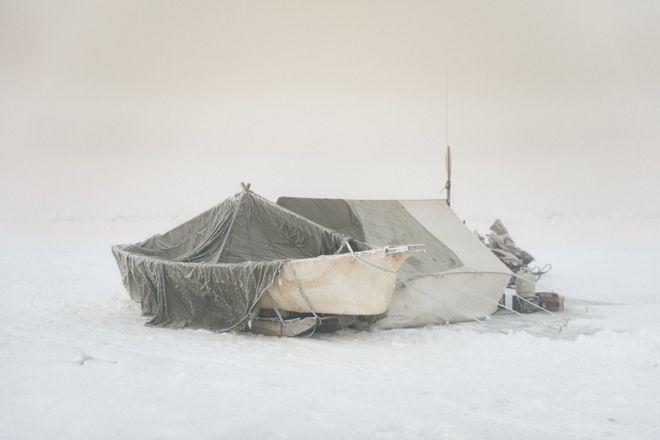
This camp, erected miles out on the sea ice, is the Inupiaq home away from home. Despite spending months living in cramped and frozen quarters, the captain of Yugu crew prefers it.
This camp, erected miles out on the sea ice, is an Inupiat home away from home during hunting season.
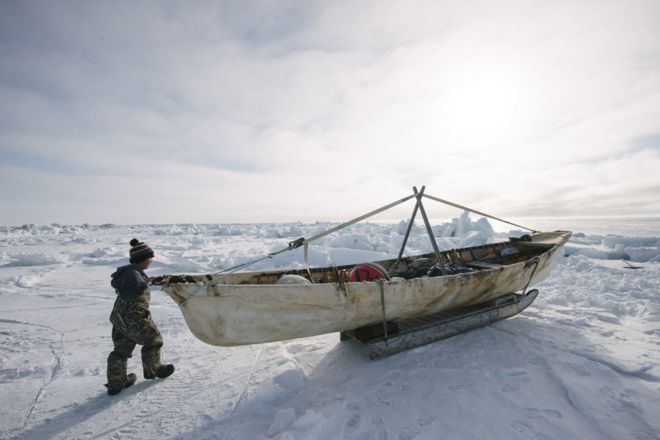
Six-year-old Steven Reich examines his father's umiaq, or skin boat used for whaling. His father Tad, captain of Yugu crew, expresses excitement about taking Steven out whaling on the ice for the first time. "I am proud of my son - he's here to learn to be a hunter," he says.
Six-year old Steven Reich examines his father's umiaq, or skin boat used for whaling.

Australia v England: Hosts drop all-rounder Glenn Maxwell for one-day series

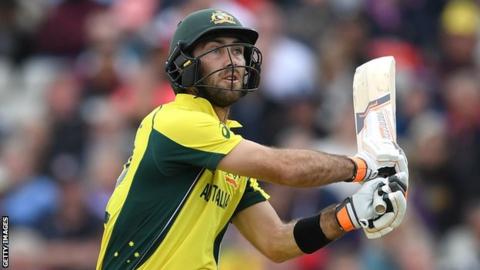
Glenn Maxwell
Glenn Maxwell has 2,035 runs and 45 wickets in 80 one-day internationals for Australia
Australia have dropped all-rounder Glenn Maxwell for the one-day international series against England.
The 29-year-old, a World Cup winner in 2015, averages 20.68 in his past 21 ODIs and has taken only three wickets.
"We want consistent performances from him," said captain Steve Smith.
"If he keeps switched on, trains well and focuses on basics more than expansive things, that will help him have consistency and if he's doing that, you want him in the team."
Smith added: "Looking at the way he trains, he could train a bit smarter.
"We've seen the way he can play and do all his funky stuff and be pretty cool with that, but when he puts his head down he's a really good batsman."
Explosive batsman Chris Lynn is included, while wicketkeeper Tim Paine is in line to play his first ODI for seven years after forcing his way back into the Test side.
Uncapped pair Jhye Richardson and Andrew Tye provide pace-bowling back-up for Mitchell Starc, Pat Cummins and Josh Hazlewood.
The first of the five one-day internationals is in Melbourne on 14 January.
Squad in full: Steve Smith (capt), David Warner, Patrick Cummins, Aaron Finch, Josh Hazlewood, Travis Head, Chris Lynn, Mitchell Marsh, Tim Paine (wk), Jhye Richardson, Mitchell Starc, Marcus Stoinis, Andrew Tye, Adam Zampa.

Cranfield is a university with a difference – it has its own airport and its own fleet of planes. Mark Piesing finds out why. Share on Facebook

“Ignition!” shouts Nick Lawson from the cockpit as the twin engines of the small turboprop airliner we are in roar into life.
Within minutes of taking off from the runway, the elderly aircraft has reached 45,000ft (13km). Lawson and fellow pilot Joe Brown throw the plane into a 50-degree turn. As I’m pushed down and back into my seat by the g-forces, I don’t know whether to cry or be sick.
This is no ordinary flight. Around me sit several students, clutching sick bags and notepads at the ready. Lawson – known as the “the flying professor” – is unique amongst British academics. He not only carries out university research that could shape the future of aviation, he is also a qualified commercial airliner pilot.
When the plane levels off, his students put down their sick bags and pick up their pens, scribbling down data from the digital displays in front of them.

Some possible precipitating factors are already in place. How the West reacts to them will determine the world’s future, says Rachel Nuwer

The political economist Benjamin Friedman once comparedmodern Western society to a stable bicycle whose wheels are kept spinning by economic growth. Should that forward-propelling motion slow or cease, the pillars that define our society – democracy, individual liberties, social tolerance and more – would begin to teeter. Our world would become an increasingly ugly place, one defined by a scramble over limited resources and a rejection of anyone outside of our immediate group. Should we find no way to get the wheels back in motion, we’d eventually face total societal collapse.
Such collapses have occurred many times in human history, and no civilisation, no matter how seemingly great, is immune to the vulnerabilities that may lead a society to its end. Regardless of how well things are going in the present moment, the situation can always change. Putting aside species-ending events like an asteroid strike, nuclear winter or deadly pandemic, history tells us that it’s usually a plethora of factors that contribute to collapse. What are they, and which, if any, have already begun to surface? It should come as no surprise that humanity is currently on an unsustainable and uncertain path – but just how close are we to reaching the point of no return?

Monday, January 1, 2018

North Korea's Kim Jong-un issues threats and olive branch

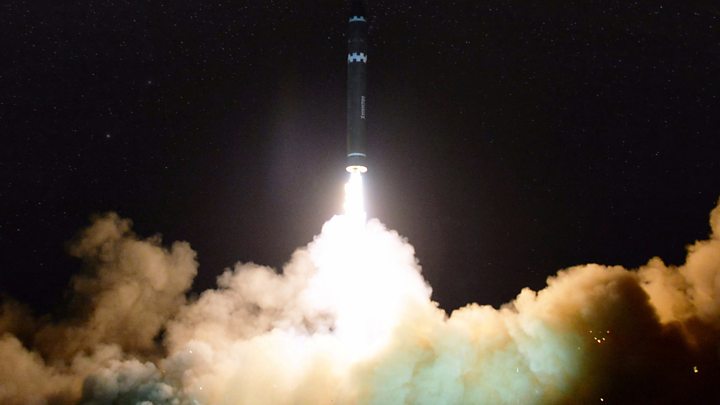
North Korea's leader Kim Jong-un has said a nuclear launch button is "always on my table", warning the US it will never be able to start a war.
In a televised new year speech, he said the entire US was within range of North Korean nuclear weapons, adding: "This is reality, not a threat."
But he also offered a potential olive branch to South Korea, suggesting he was "open to dialogue".
North Korea may also send a team to the Winter Olympics in Seoul, he said.
When asked by reporters to respond to Mr Kim's threats, US President Donald Trump said, "we'll see, we'll see".
He was speaking at the sidelines of New Year's Eve celebrations at his Mar-a-Lago resort in Florida.

Great Barrier Reef: Australia unveils A$60m protection plan

The Australian government has announced a A$60m (£34m; $48m) plan to help improve the health of the Great Barrier Reef. The reef su...